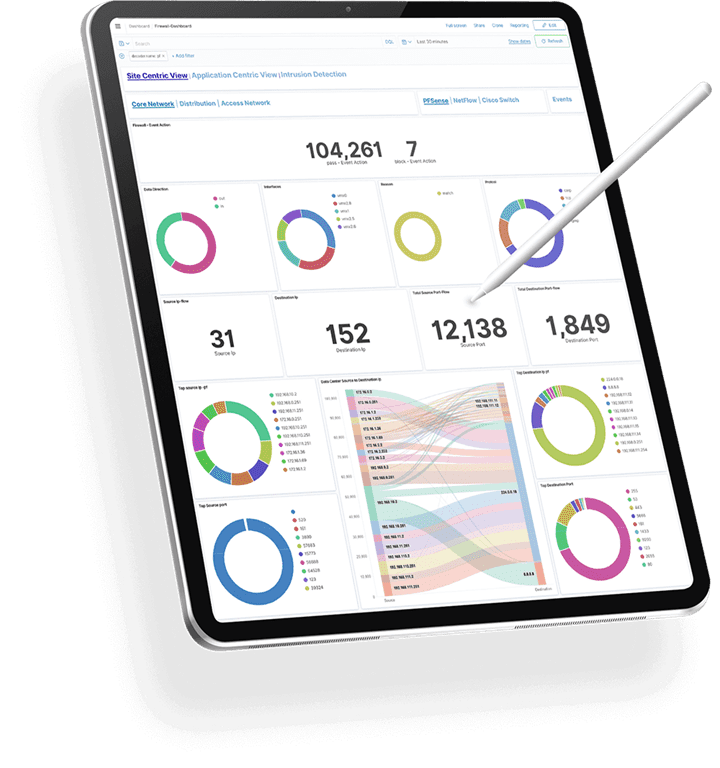
Amygdala XDR® is an security detection, visibility, and compliance platform that enables organizations to protect their IT infrastructure from potential threats and actively respond to security threats in real time. It leverages popular security tools, such as Elasticsearch, Kibana, and OSSEC
Amygdala XDR®
Amygdala XDR® is the detection and response core of the ecosystem. It unifies Security Information and
Event Management (SIEM) with Extended Detection and Response (XDR) so that a single platform ingests,
normalises, decodes, and correlates security telemetry from across the estate, and then acts on confirmed
threats without waiting for a separate tool. Coverage spans physical and virtual endpoints, Windows, Linux,
and macOS servers, cloud workloads, containers, network devices, and identity providers, giving analysts a
single, correlated view of activity everywhere data is generated.
Rather than depending on static signatures alone, Amygdala XDR® layers rule-based correlation, log data
analysis, file integrity monitoring, behavioural and anomaly detection, continuous configuration assessment,
and vulnerability detection over a common data model. Each source is decoded into a shared schema, so
events from different layers can be reasoned about together. The result is high-fidelity detection across the
full attack surface, mapped to adversary techniques and enriched with threat intelligence before it reaches
an analyst.
Overview
Amygdala XDR® is composed of three primary components: agents, servers, and a web-based user interface (WUI). The agents are installed on endpoints to collect system logs and security events. The collected data is transmitted to the Amygdala XDR® server for further analysis and processing. The Amygdala XDR® server utilizes Elasticsearch and Kibana to index and visualize the collected data, enabling real-time alerts and reporting to security teams.
In addition to its core components, Amygdala XDR® also includes decoders and a ruleset that assist in identifying known and unknown threats, as well as compliance monitoring capabilities to ensure organizations meet regulatory and industry standards. Amygdala XDR® provides a robust and adaptable security platform that enables organizations to detect and respond to security incidents in real time. The platform’s nature facilitates community contributions and customization to meet specific security needs.
Log Collection: Agent-Based and Agentless
Amygdala XDR® collects logs and security telemetry through two complementary methods, so visibility never depends on whether software can be installed on a given system. Both paths feed the same pipeline and are normalised into the same schema, which means detection and correlation work identically regardless of how the data arrived.
Agent-based collection
A lightweight, resident agent is deployed on endpoints, servers, cloud instances, and containers. It gathers file integrity events, running process and registry activity, command execution, local security and application logs, software inventory, and configuration state,then streams them over a secure, authenticated channel with auto-enrolment, buffering, and centralised policy management
Agentless collection
For systems where an agent cannot or should not be installed firewalls, routers, switches, hypervisors, printers, storage appliances, IoT and operational-technology devices, and thirdparty cloud and SaaS platforms Amygdala XDR® ingests data remotely via Syslog, Windows Event Forwarding, SNMP, network flow records, secure API pulls, and remote command or configuration collection over SSH.
Unified normalisation
Every record from either path is decoded, parsed, and mapped to a common event model, so a single correlation rule, dashboard, or search operates seamlessly across agent and agentless sources alike.
Amygdala XDR® Significance
Amygdala XDR® provides a robust and adaptable security platform that enables organizations to detect and respond to security incidents in real time. The platform’s nature facilitates community contributions and customization to meet specific security needs.
Amygdala XDR® is composed of three primary components: agents, servers, and a web-based user interface (WUI). The agents are installed on endpoints to collect system logs and security events. The collected data is transmitted to the Amygdala XDR® server for further analysis and processing. The Amygdala XDR® server utilizes Elasticsearch and Kibana to index and visualize the collected data, enabling real-time alerts and reporting to security teams.
In addition to its core components, Amygdala XDR® also includes decoders and a ruleset that assist in identifying known and unknown threats, as well as compliance monitoring capabilities to ensure organizations meet regulatory and industry standards.
Industry Difference
Improved Efficiency
Amygdala XDR® security solution automates routine tasks, such as threat detection, incident response, and remediation. This automation helps security teams to work more efficiently, freeing up time for other critical tasks.
Enhanced Security Posture
By providing complete visibility into an organization's IT infrastructure, Amygdala XDR® comprehensive security solution helps organizations identify potential vulnerabilities, threats, and risks that could compromise their security. This visibility enables organizations to take proactive measures to mitigate those risks, improving their overall security posture.
Better Compliance Management
Amygdala XDR® Comprehensive security solution provides better tools for managing compliance requirements. It helps organizations to track their compliance status, audit their security and data practices, and generates reports to demonstrate compliance with industry standards and regulations.
Reduced Costs
Comprehensive security solutions can help reduce costs associated with security breaches, compliance violations, and other security incidents. By identifying potential risks and vulnerabilities early on, organizations can take proactive steps to mitigate those risks, reducing the potential impact of incidents on their business.
Improved Customer Trust
Amygdala XDR® comprehensive security solution helps build trust between an organization and its customers. By demonstrating a commitment to security and compliance, organizations can reassure customers that their data and information are protected.
Conclusion, Amygdala XDR® Comprehensive Security, Detection, Visibility, and Compliance Solution makes the security industry better by improving efficiency, enhancing security posture, reducing costs, and building customer trust.
Amygdala XDR® Key Features
Multi-source log ingestion and analysis
Centralised collection, decoding, and real-time analysis of
operating-system, application, cloud, network, and identity logs, with pre-built decoders and rulesets
and full support for custom rules.
File Integrity Monitoring (FIM)
Real-time detection of changes to file and directory content,
permissions, ownership, and attributes across critical paths, including identification of the user and
process responsible for each change
Malware, rootkit, and anomaly detection
Agents scan for malware, rootkits, hidden files, cloaked
processes, and unregistered network listeners, integrating with signature and reputation services and
custom rules to flag known and suspicious artefacts
Security Configuration Assessment (SCA)
Continuous evaluation of system and application hardening
against recognised benchmarks such as the CIS controls, with clear pass or fail findings and prioritised
remediation guidance.
Vulnerability detection
Each asset's software inventory is correlated against continuously updated
vulnerability (CVE) data to surface exposed and unpatched software before an attacker can exploit it.
Cloud and container security monitoring
Visibility into cloud accounts, workloads, Kubernetes, and
container runtimes, including audit-trail analysis and runtime activity monitoring for cloud-native
environments.
Active response and XDR actions
Granular, automated on-device remediation blocking a source
address, quarantining a file, terminating a process, disabling an account, or isolating a host triggered
automatically above confidence thresholds or on demand
Threat-intelligence enrichment
Observed indicators are correlated against curated intelligence feeds
and reputation sources to prioritise confirmed malicious activity and reduce false positives.
MITRE ATT&CK mapping
Every detection is tagged to adversary tactics and techniques, giving analysts
immediate context, supporting threat hunting, and enabling coverage-gap analysis.
Role-based access and multi-tenancy
Granular access control and tenant separation allow a single
deployment to serve multiple business units or managed-service customers securely.
Compliance and audit reporting
Out-of-the-box control mapping for PCI DSS, HIPAA, GDPR, NIST 800-
53, ISO 27001, and SOC 2, with dashboards and exportable, evidence-ready reports.
Scalable architecture
A modular, horizontally scalable design supports single-node deployments
through to clustered, high-availability installations handling large event volumes.
Amygdala XDR® Benefits
Improved security posture
Real-time threat detection and response strengthen defences across the
full attack surface
Increased visibility
Correlated events and logs from every layer of the estate provide complete visibility into security threats.
Faster incident response
Confirmed, high-confidence detections trigger automated containment,
cutting response time dramatically.
Continuous compliance
Built-in control mapping keeps organisations aligned with industry and
regulatory standards, with evidence on demand.
Lower costs
A unified platform reduces tool sprawl and the cost of security breaches and compliance
violations.
Adaptability
Custom rules, decoders, and integrations let the platform be tailored to specific security
requirements.
Customization
The nature of Amygdala XDR® enables community contributions and customization to satisfy specific security requirements.
It provides extended detection and response across endpoints, servers, networks, and cloud workloads,combining SIEM and XDR in a single platform.
2. What’s the difference between XDR and SIEM?
A SIEM mainly collects and analyses logs; XDR detects and responds in real time. Amygdala XDR® unifies both, so detection and response happen on one platform
3. How does Amygdala detect threats?
Through a combination of rule-based correlation, behavioural and anomaly analytics, threat intelligence, integrity monitoring, and vulnerability correlation.
4. Does Amygdala XDR support automated response?
Yes. It can isolate endpoints, block addresses, quarantine files, terminate processes, and trigger orchestrated response playbooks
5. What data sources does it ingest?
Logs and telemetry from firewalls, endpoints, servers, cloud apps, network devices, identity providers, and third-party systems, via agents or agentless collection.
6.Is it cloud-based or on-prem?
Both. Amygdala XDR® can be deployed on-premises, in private or public cloud, or as a hybrid model.
7.How is Amygdala XDR deployed?
With lightweight agents and native integrations.
8.Can it detect ransomware and zero-day attacks?
Yes, using anomaly-based and heuristic detection alongside behavioural analytics that catch attacks before signatures exist.
9. What is the role of AI and analytics?
Behavioural and anomaly analytics help detect unknown threats and reduce false positives, prioritising the signals that matter.
10. Is incident response manual or automated?
It supports both manual triage and automated responses
11. Is Amygdala XDR suitable for compliance monitoring?
Yes. It maps to major frameworks including PCI DSS, HIPAA, GDPR, NIST 800-53, ISO 27001, and SOC 2, with audit-ready reporting.